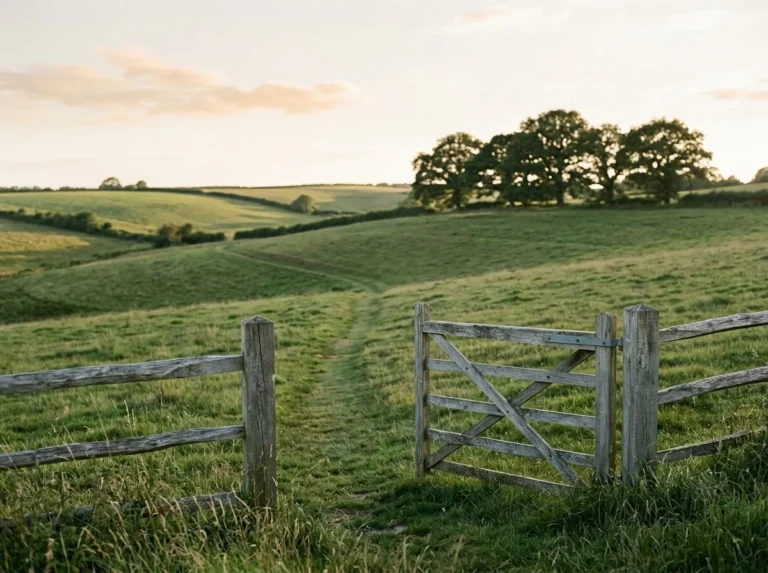
A cattle fencing budget should cover a complete working system, not simply the length of wire around a field. Gates, corner assemblies, labor, ground conditions, safe access, and maintenance can materially change the cost. Begin with a property inspection before choosing materials.
Map the job before requesting quotes
Mark the legal boundary, existing fence condition, slopes, wet ground, road exposure, water access, and the areas you intend to divide. Confirm boundary questions with the appropriate professional rather than assuming an old fence marks the legal line.
Measure usable fence runs and note where machinery, livestock trailers, and veterinary vehicles need access. Include a receiving or separation area and the route to handling facilities. Discuss the layout with someone experienced in the type of cattle you plan to keep.
Ask for a whole-system quote
Request separate figures for materials, installation, gates and hardware, ground preparation, removal of unsafe existing materials, and any electrical components in the proposed system. Check whether taxes, delivery, and equipment access are included.
If electric fencing is part of the plan, obtain advice on a suitable energizer, earthing, vegetation management, testing, animal introduction, and backup arrangements. Do not treat a product’s maximum advertised range as a property-specific design.
Budget for the animals you will actually manage
Your smallest calf and your largest adult can create different containment challenges. Horns, behavior, neighboring livestock, roads, and public access also matter. A “miniature” label is not a specification for safe openings, gate height, or fence strength.
Handling-system design should fit the cattle and the tasks involved; relying on an animal’s apparent calmness is not a substitute for suitable facilities. 5
Include inspection and replacement
Ask the installer which parts will need routine checking and what local weather or soil conditions shorten service life. Allow for repairs after storms, vegetation control, damaged gates, and replacement of worn components.
If you plan to do the work yourself, include tools, equipment hire, safety requirements, and your time. Have a competent person inspect the finished system before cattle arrive. An inexpensive incomplete fence can become an expensive emergency.
A practical budgeting sequence
- Confirm the usable layout and boundaries.
- Obtain advice on a suitable system.
- Request comparable itemized quotes.
- Add ongoing maintenance and a repair reserve.
- Finish and inspect the fence before arranging collection.
Pair this budget with our fencing planning guide and the handling-facilities checklist. Spending should follow a safe design, not the other way around.
AI-assisted buyer education, informed by the sources linked above. No first-hand farm experience or professional qualification is implied. Ask a qualified veterinarian, agricultural adviser, or relevant authority about your own animals and location.