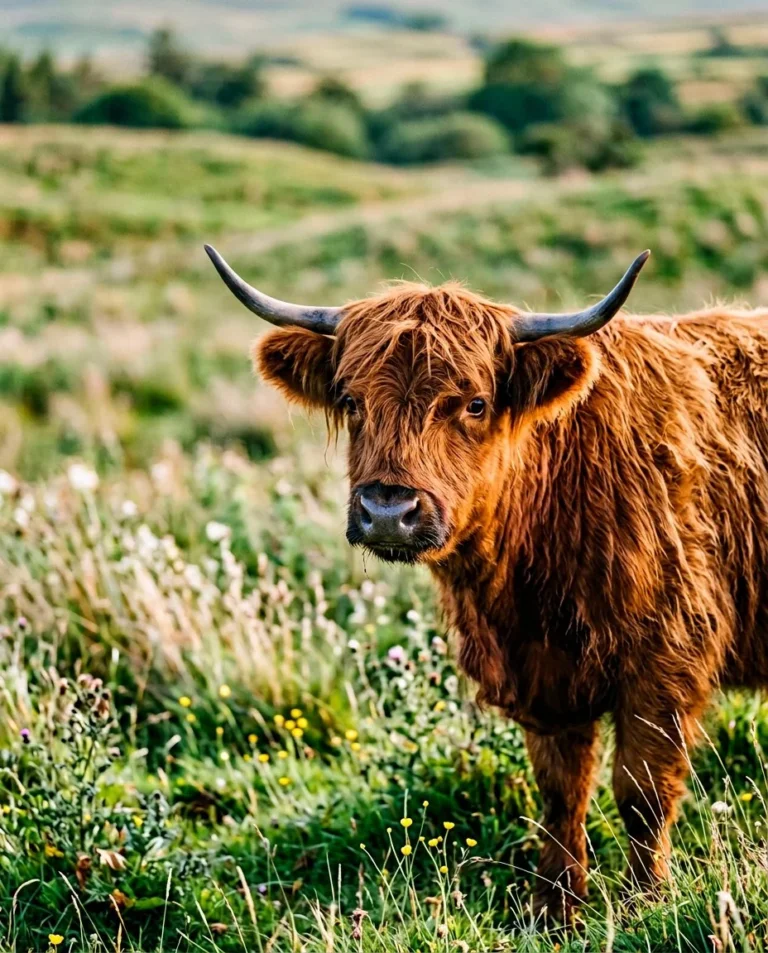
A Highpark vs Highland comparison is most useful when it separates appearance, ancestry, and individual suitability. A coat pattern can help you describe an animal, but it cannot by itself establish parentage, registration, mature size, temperament, or health.
Ask for the actual ancestry
If an animal is advertised as Highpark, ask the seller to describe the known breeding behind that individual and provide the relevant parent records. If it is advertised as Highland, ask whether the claim is purebred, percentage-based, crossbred, or an informal description of appearance.
Do not infer ancestry from a pale body, colored points, a shaggy coat, or horns. Where information is unknown, it should remain unknown in the description rather than being filled in with a persuasive breed story.
Read the registry description carefully
Request the registry name and animal number where applicable. Find out what the specific certificate records and what is required to transfer it. Different organizations may use different categories, so two uses of “registered” are not necessarily equivalent.
A registration record does not replace an individual health assessment or guarantee that a calf will mature to the size you prefer. Our cattle-papers guide explains how to keep those questions separate.
Compare practical needs using the same checklist
For each animal, record age, sex, current measurements, mature parental records, feeding history, handling observations, and health documents. Consider local climate, your water and shade arrangements, horn-compatible equipment, and your experience.
Safe handling depends on appropriate facilities and understanding cattle behavior, not on a breed label that suggests an animal will be gentle. 1
Ask to see ordinary handling demonstrated safely and discuss how the animal behaves when separated, loaded, or restrained for care.
If breeding is your goal
Take the actual pedigree, relatedness, genetic results, and reproductive assessments to your veterinarian or a qualified breeding adviser. Do not select a pair solely for matching markings or a fashionable name.
Relevant genetic tests must be interpreted by variant and animal identity. UC Davis notes that some dwarfism variants occur in several miniature-cattle populations, making assumptions based only on a label unhelpful. 2
A useful way to choose
Write two lists: documented characteristics and personal preferences. Put confirmed ancestry, health information, and practical suitability in the first. Put coat color and visual style in the second. Only compare preferences after the essential needs are met.
Explore the cattle categories and breeding-pair questions to decide which information you need before making an inquiry.
AI-assisted buyer education, informed by the sources linked above. No first-hand farm experience or professional qualification is implied. Ask a qualified veterinarian, agricultural adviser, or relevant authority about your own animals and location.