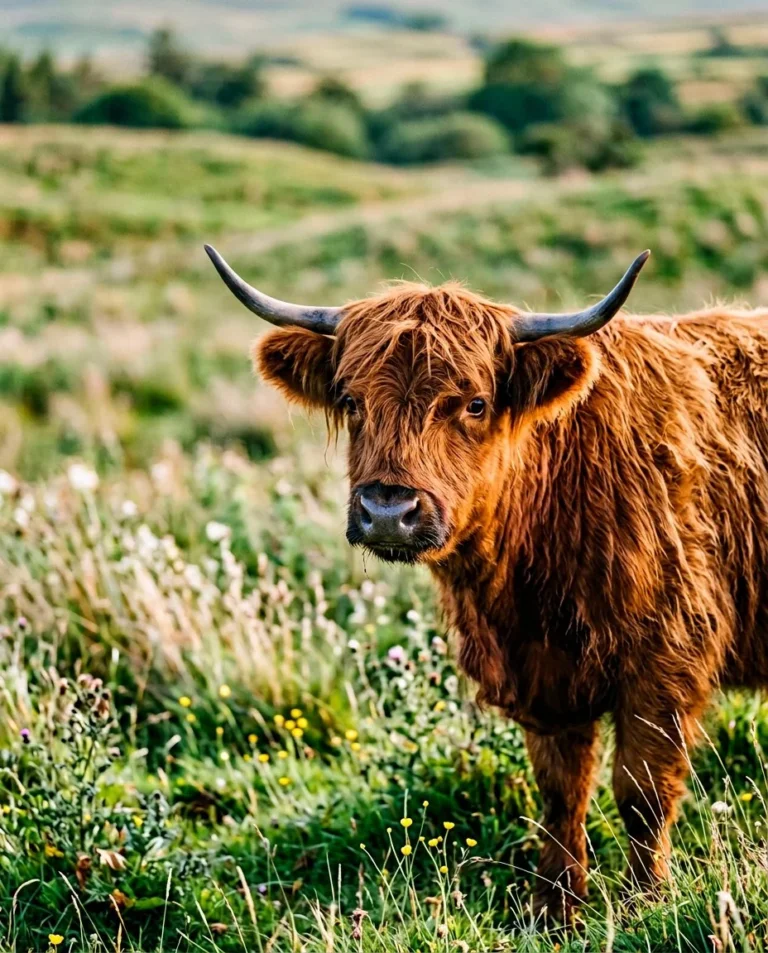
A mini Highland vs standard Highland comparison should begin with the animal’s documented background and size—not with two photographs. A young calf can look very small beside a mature animal, and a marketing label does not tell you how the comparison was made.
Ask what “mini” means in the listing
Request the seller’s definition, the age at which size is assessed, and the measurement point used. Hip and shoulder measurements should not be mixed as though they were identical. Ask for dated measurements of the individual and mature parents using a consistent method.
The word “mini” by itself does not prove purebred ancestry, a particular registry classification, or a guaranteed adult size. Check each of those claims separately. Where ancestry is crossbred or partly unknown, the description should make that clear.
Compare actual management needs
Smaller cattle still require secure boundaries, water, appropriate feed, compatible cattle companionship, and safe handling arrangements. Do not translate a smaller frame into an assumption that a suburban lawn or improvised pen is suitable.
Your property’s usable forage, weather, soil, and feeding plan determine practical stocking decisions. Use our land guide to build a location-specific plan rather than choosing from a generic acreage promise.
Look beyond height
Review mobility, body condition, feet, known health history, relevant genetic results, and the animal’s suitability for your purpose with a veterinarian. An unusually short appearance should prompt useful questions, not automatic enthusiasm.
UC Davis offers testing for specific bulldog dwarfism variants and lists miniature Scottish Highland cattle among breeds appropriate for relevant testing. The laboratory report identifies particular variants; it is not a general certificate of health or a prediction of adult height. 2
Build a fair comparison
Use the same fields for each animal: age, ancestry, registration if applicable, current measurement, adult parental records, sex, reproductive status, handling history, and veterinary information. Add your intended purpose and the changes your facilities would need.
Compare individuals rather than assuming every animal under one label behaves the same way. Training history and the context of a demonstration can matter more to your daily routine than a category name.
The decision to make
Choose the animal whose documented characteristics and needs fit your ready property and experience. If smaller mature size is essential, ask a veterinarian and experienced breeder how much uncertainty remains and whether a mature, measured animal would provide clearer information than a calf.
Read assessing mature size and reading cattle papers before treating either “mini” or “standard” as a complete description.
AI-assisted buyer education, informed by the sources linked above. No first-hand farm experience or professional qualification is implied. Ask a qualified veterinarian, agricultural adviser, or relevant authority about your own animals and location.