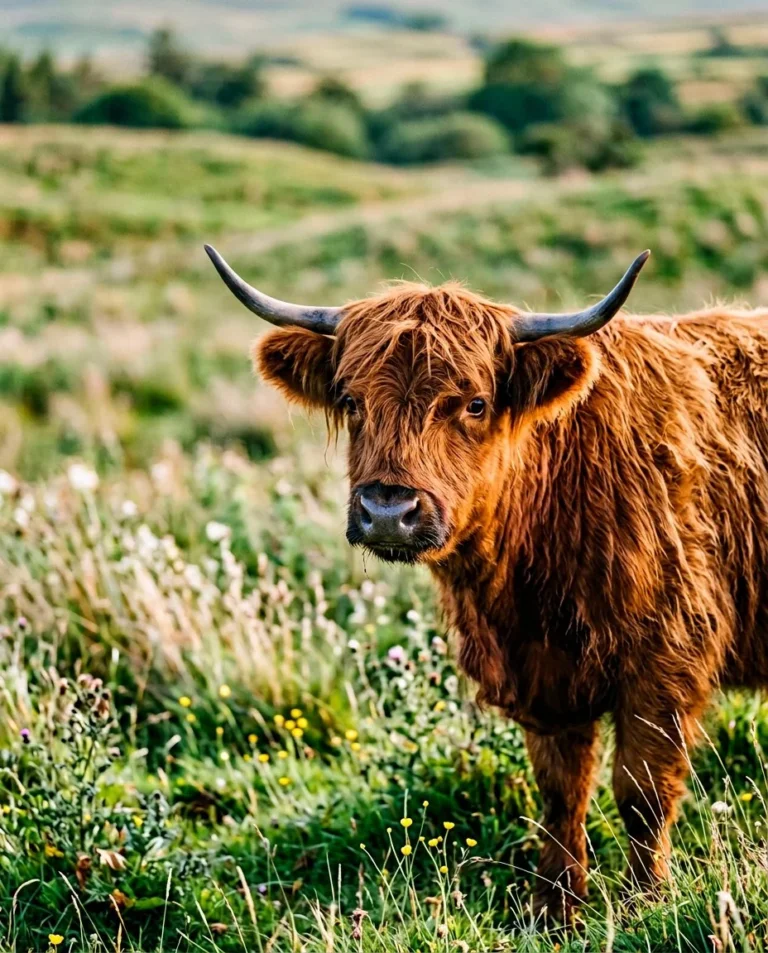
Chondrodysplasia testing in mini cattle is a subject to discuss with your veterinarian using the actual laboratory reports. Advertising shorthand such as “chondro positive” or “chondro negative” leaves out the variant tested, the sample identity, and the limits of the result.
What the relevant tests describe
UC Davis Veterinary Genetics Laboratory describes Dexter bulldog dwarfism variants BD1 and BD2 in the ACAN gene. Its information lists Dexter cattle, Dexter crosses, miniature Jersey, miniature Zebu, and miniature Scottish Highland among breeds appropriate for relevant testing. Each of the two listed variants requires a separate test. 2
The report should identify the animal or sample, the laboratory, the variant, and the result. Ask for a complete readable copy rather than a rewritten badge on a sale card.
Why breeding decisions need care
For the Dexter BD1 variant, the laboratory describes an N/BD1 result as a carrier. Breeding two such carriers creates a 25% chance of an affected calf for each mating. Affected fetuses have severe developmental abnormalities. The laboratory provides corresponding information for BD2. 2
Do not treat a carrier-to-noncarrier match as a promise of healthy offspring overall. It addresses a particular inheritance question, not fertility, calving risk, unrelated genetic conditions, or the lifetime health of parents and offspring. Have a veterinarian or qualified genetics adviser review the complete plan.
Understand what a negative result does not say
A result showing no copy of one tested variant does not rule out every genetic condition or every cause of abnormal development. It does not verify breed purity, parentage, adult size, or temperament.
Different populations may require different tests. UC Davis separately describes a miniature Zebu bulldog dwarfism variant distinct from the Dexter variants, while also noting that Dexter BD1 can occur in miniature Zebu. Test selection therefore matters. 5
Check that the report belongs to the animal
Compare the animal identifier on the document with sale and veterinary records. Ask how the sample was collected and labeled. Where identity or interpretation is uncertain, consult the laboratory or your veterinarian rather than guessing from a screenshot.
Do not describe an animal as tested merely because a parent has a report. Your adviser can explain what parental results establish and when an individual test is needed.
Before purchasing breeding stock
Gather identification, ancestry, all relevant genetic reports, reproductive assessments, and health records. Ask the adviser to explain risks and alternatives in ordinary language. If key results are missing, postpone the breeding decision.
Read buying a breeding pair and cattle health records for the rest of the evidence pack. This article is buyer education, not an individualized breeding recommendation.
AI-assisted buyer education, informed by the sources linked above. No first-hand farm experience or professional qualification is implied. Ask a qualified veterinarian, agricultural adviser, or relevant authority about your own animals and location.